LUCID / Tristan Schulze
Interactive installation at the Spinning Mill
In his work LUCID, Tristan Schulze explores what creative interactions between humans and machines might look like in the future. A device equipped with artificial intelligence generates web patterns during creative processes and invites visitors to help shape them. The visitor’s own creative process merges with that of the machine, leaving traces in its code. However, the relationship remains ambivalent – after all, every interaction further trains the artificial intelligence, thereby strengthening its autonomy.
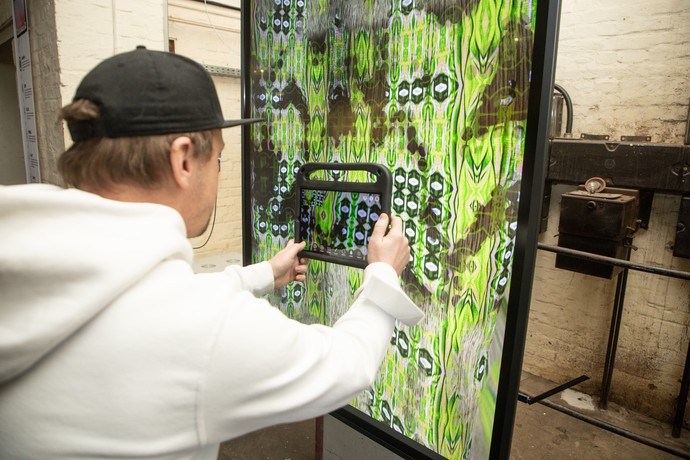
Machine learning is a key component of many industrial automation processes and is increasingly changing our concept of work. Against this backdrop, Tristan Schulze focuses not only on the question of what we will regard as work in the future, but above all on considerations as to how we will work.
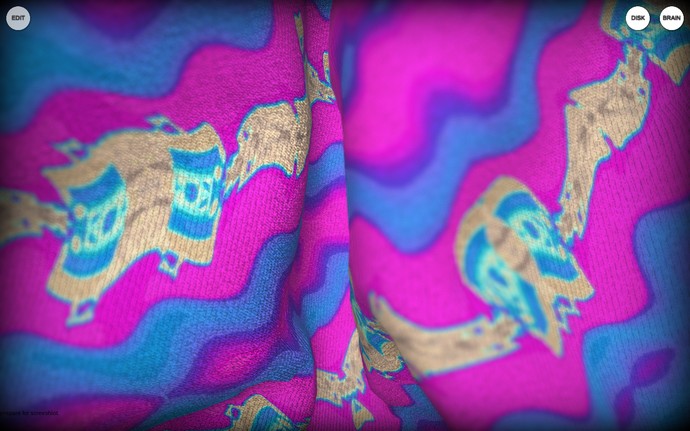
To create new web patterns, LUCID draws on the extensive pattern archive of the Bocholt textile factory, which reflects the history of textiles in the 20th century. Over the coming years, this archive will be made accessible to young designers, thereby serving as a source of inspiration for new patterns.
Tristan Schulze
Tristan Schulze, born in Leipzig in 1982, is a German designer, artist and lecturer. His work reflects current developments in the digital world, including an exploration of artificial intelligence, mixed reality and Internet of Things technologies. Physicality and haptics play an important role in Schulze’s work, bridging the gap between the digital and physical worlds. Schulze lives and works in Leipzig.



Interactive installation
The installation is located on the ground floor of the spinning mill.
FUTUR 21
art industry culture
Tristan Schulze’s work LUCID was created as part of the FUTUR 21 media art festival.